Church Folk Art SVG File for Graphics & Crafts
There is a warmth that radiates from a well-crafted folk art design, and the moment I opened the Church Folk Art, SVG File, I knew it would speak directly to readers who crave content that feels personal, rooted, and visually comforting. This isn’t just another generic illustration. It’s a graphic design asset that carries the charm of a hand-drawn rural church, wrapped in the kind of artistic detail that makes a blog post or digital product instantly more approachable.
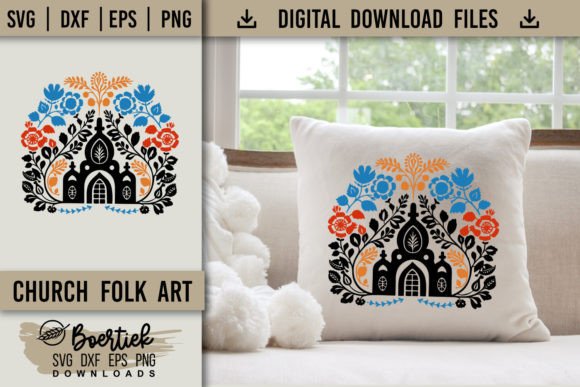
The first impression is one of quiet nostalgia. A cozy church sits at the center, its character defined by intricate lines that feel both deliberate and gentle. Around it, flowers bloom in vivid shades of blue and orange, softening the structure and adding a playful, almost storybook quality. As a digital publisher, I’m always looking for design assets that can carry an editorial mood without overwhelming the message, and this SVG balances decorative charm with enough restraint to work in a professional publishing environment.
A First Look at the Church Folk Art SVG File
When you zoom in, the linework is what holds your attention. It’s not overly polished, and that’s precisely the point. The church feels handmade, as if it could have been lifted from a vintage postcard or a centuries-old community quilting pattern. The flowers, in their bold blue and orange hues, frame the building with a sense of celebration. It’s a seasonal aesthetic that leans toward early autumn or late summer, but the versatility is there. I could see it anchoring a springtime newsletter just as easily as a fall faith-based blog roundup.
For publishers who run niche content sites—think crafts, slow living, rural lifestyle, faith-based writing, or even gardening and homesteading—this SVG taps into a visual language that says “handcrafted” and “trustworthy.” It’s decorative, yes, but it’s also deeply readable. The viewer doesn’t need to decode a complex illustration; they simply feel the mood. That’s a powerful tool for editorial design.
Editorial Mood and the Visual Story It Tells
Every piece of blog graphics you place on a page is telling a story before your headline gets a chance. The Church Folk Art, SVG File creates an editorial mood that is warm, inviting, and slightly whimsical without being childish. It’s a mood that builds reader trust. When a visitor lands on a blog post about community traditions, seasonal crafts, or even a downloadable devotional, and they see this kind of organic, folk-inspired artwork, they’re more likely to stay. The art feels like it belongs to a real person, not a faceless content mill.
I’ve tested similar assets on content pages that rely on visual hierarchy to guide the eye. The church’s vertical lines naturally draw attention upward, which can be useful if you’re placing a headline above or below the image. The surrounding flowers create a soft frame, making it an excellent candidate for a website header or featured image where you want to contain the viewer’s gaze.
Where This Graphic Design Asset Fits in Real Publishing Workflows
Let’s step into a real publishing scenario. Imagine you’re a blogger preparing a series of articles on rural church architecture, seasonal crafts, or community event planning. You need a consistent visual thread that ties together your Pinterest pin designs, your article thumbnails, and maybe a free downloadable checklist. The Church Folk Art, SVG File becomes the heart of that visual system. You can recolor it, scale it, and layer it with text in Canva or Adobe Illustrator, making it a remarkably flexible digital product backbone.
For social media graphics, this SVG stands out. On Pinterest, where click-through depends on a pin’s ability to stop the scroll, a hand-drawn church surrounded by vibrant flowers offers a refreshing break from overly sleek stock photos. It signals that your content is authentic, creative, and maybe even a little nostalgic. For newsletter graphics, the same asset can become a header that gives your email a warm, editorial feel, increasing the likelihood that subscribers will read on.
I’ve also used similar files as digital guide covers, lead magnet artwork, and even as decorative accents inside eBooks. The ability to export the SVG in multiple sizes means you can use it as a large hero image on a sales page or as a delicate footer detail in a printable design without losing quality.
Strengthening Your Content’s First Impression with Thoughtful Art
In content marketing, the first impression is often visual. A blog post with a poorly chosen graphic can lose a reader in seconds. The Church Folk Art, SVG File strengthens that first impression by creating a clearer visual hierarchy. The eye moves from the intricate church to the surrounding flowers, and then naturally to the headline you’ve placed. It’s a structured, gentle flow that helps your message land.
This kind of creative design also supports brand identity. If you’re a small business owner or affiliate marketing blogger, using consistent, distinctive artwork across your site builds recognition. The folk art style of this SVG is memorable enough to become a signature element. When readers see those blue and orange flowers on a thumbnail, they’ll know it’s you. That’s small business branding at its most organic.
Practical Placement: Where the SVG Shines
In my own publishing workflows, I’ve found that this asset works best in spaces where it has room to breathe. Use it as a hero image for a feature article, and it will set the tone beautifully. As an article thumbnail on a category page, it creates a consistent, inviting grid. For Pinterest pins, it’s a natural—scaled with a bold text overlay, it becomes a highly clickable, modern design that still feels handmade.
It’s also strong as an editorial accent. In a long-form blog post, a small version of the SVG can break up text, adding a decorative pause that keeps the reader engaged. For content upgrades like worksheets or checklists, it can serve as a header or a subtle background element. Category visuals on a blog’s homepage gain personality, and newsletter headers feel more personal.
Where to Use It Carefully (and Why)
As much as I admire this SVG, it’s not a universal solution. On very small mobile thumbnails, the intricate linework can lose definition. I’d avoid using it as a tiny icon or favicon. For text-heavy blog images where the artwork competes with a long headline, the result can feel cluttered. Test it on a low-contrast background, and the delicate lines might fade, so always place it on a clean, preferably light or solid backdrop.
If your niche is strictly corporate, legal, or tech-focused, the folk art style might feel out of place. It’s not a good fit for serious professional niches that require a very minimal visual system. However, for lifestyle, faith, craft, and family-oriented content, it’s a natural fit. Just be mindful of the context. The art invites a slower, more reflective reading experience, which may not align with fast-paced news or data-driven sites.
Testing the Design Asset Like a Publisher
Before you commit this digital download to a live site, do what I do: run a series of tests. View it on both desktop and mobile screens to ensure the linework remains crisp. Check how it looks as a thumbnail in your blog’s grid layout; sometimes, what works full-size becomes muddy when reduced. Preview it inside a real blog layout with your chosen headline text. Does the contrast hold? Is the church still recognizable, or does it become a blur?
I always test graphic design assets with multiple font families. Place a serif font beside it, and the vintage feel amplifies. Try a sans serif font for a cleaner, more modern contrast. A script font can look too busy, so be cautious, while a handwritten font may echo the folk art vibe perfectly. Display fonts can work for headlines, but keep the text short. I also check the image in black and white to see if the composition still works; sometimes, the charm fades without color, which might affect accessibility or print applications.
File size matters for web design. An SVG is typically lightweight, but if you export it as a PNG for Pinterest or social media, compress it properly. A bloated image slows down your site, and for affiliate marketing pages, speed is revenue. Finally, confirm the commercial license. If you’re using this on monetized websites, in paid digital products, or as part of a Canva template you sell, the licensing must permit it. Never assume; always check.
Why Folk Art Elevates a Brand’s Visual Identity
In a world of sterile stock photos and minimalist flat illustration, a folk art SVG like this one stands out. It’s not just a graphics file; it’s a storytelling tool. The intricate lines and vibrant floral colors convey a sense of community, tradition, and care. For a small business or content site that wants to build a loyal, emotionally engaged audience, that’s invaluable. Your brand identity becomes less about slick uniformity and more about genuine connection.
I’ve seen creative marketplace assets that mimic this style, but the ones that truly work are those that feel authentic. This SVG, with its cozy rural church and vivid botanical details, hits that note. It’s not trying to be everything; it’s simply a charming, well-executed piece of art that makes your content look more thoughtful and more human.
Final Thoughts for Publishers and Bloggers
The Church Folk Art, SVG File has earned a permanent spot in my own design toolkit. It’s the kind of asset I’ll reach for when I’m building a seasonal content calendar, creating a lead magnet for a faith-based newsletter, or designing a printable that needs to feel like a keepsake. Its versatility, combined with its distinct editorial mood, makes it a smart investment for anyone who publishes content regularly.
Remember, the best design assets don’t just decorate; they support the reading experience. They guide the eye, set the tone, and reinforce the message. Test it, place it thoughtfully, and let this little folk church and its blue and orange flowers do the quiet work of making your content feel like home.